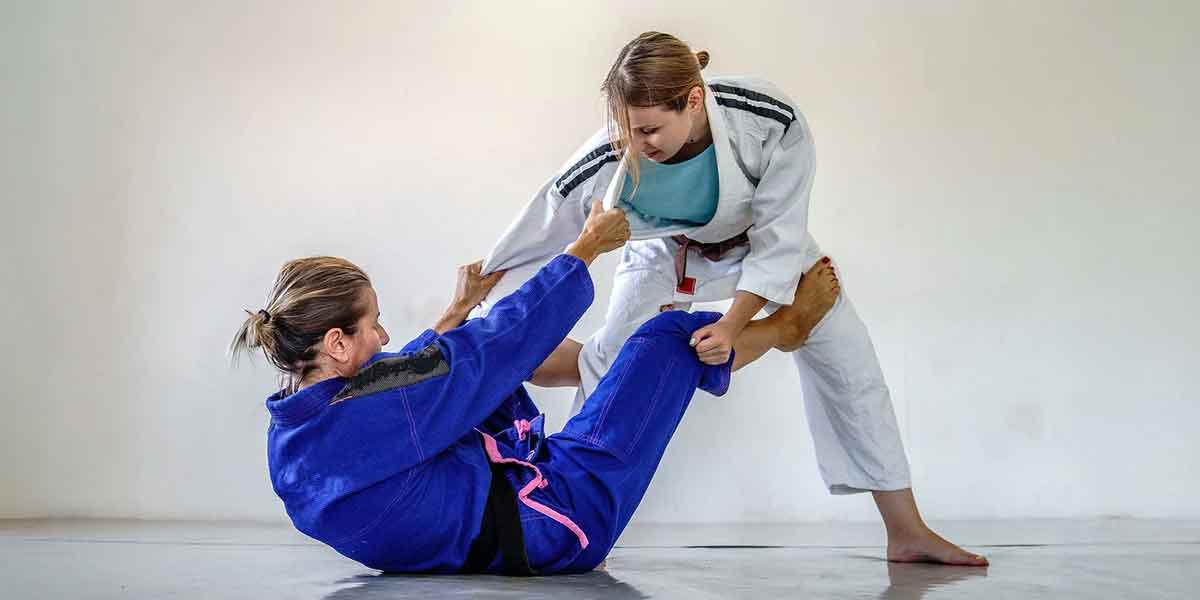
Judo is one of the oldest structured combat sports still widely practiced today, and its emphasis on balance and leverage makes it an unusually good fit for adult beginners.
Among combat sports, judo occupies an unusual position: it’s one of the oldest still practiced in something close to its original structured form, it’s been an Olympic sport for decades, and yet it gets far less attention from adult beginners than boxing or more modern grappling styles. That’s a genuine gap, because judo’s core principle, using leverage and timing rather than raw strength, makes a solid judo Toronto program an unusually accessible entry point for adults starting a combat sport for the first time, regardless of size or athletic background.
Leverage Over Strength Changes Who Can Succeed
Judo’s founding principle, maximum efficiency with minimum effort, was explicitly designed to let a smaller, weaker practitioner defeat a larger, stronger opponent through correct technique and timing rather than physical power. That design philosophy has a practical consequence for adult beginners: unlike sports where raw strength and youth provide an outsized advantage, judo rewards technical precision in a way that keeps a 45-year-old beginner from being hopelessly outmatched by a 22-year-old with more natural athleticism, provided both are training at an appropriate skill level.
This principle shows up constantly in how classes are actually structured. Coaches routinely pair beginners of very different sizes and ages together specifically because correct technique, not physical mismatch, is what determines the outcome of a well-executed throw. That structural fact changes the psychology of starting the sport considerably: a smaller or older adult isn’t stepping into a contest they’re destined to lose on physical terms alone, they’re stepping into a genuinely technical pursuit where careful study of leverage and timing can overcome a real physical disadvantage.
Falling Safely Is a Skill With Value Beyond the Mat
One of the first things any judo student learns is ukemi, the art of falling and being thrown safely. This isn’t just a prerequisite for training, it’s a genuinely useful life skill on its own. Older adults in particular face serious injury risk from falls, and the reflexive, trained ability to fall in a way that distributes impact safely rather than absorbing it through a wrist or hip has practical value that extends well beyond the training mat itself.
This is one of the more concrete, non-abstract health benefits attributable to a specific combat sport. Fall-related injury is a major and well-documented risk factor for older adults specifically, and a trained, reflexive falling response, developed over months of repeated, controlled practice, can meaningfully reduce injury severity in a genuine fall outside the gym entirely. Few other common fitness activities directly train this specific, practical skill as a core part of their curriculum rather than as an incidental byproduct.
| What judo trains | Broader benefit |
| Ukemi (safe falling technique) | Reduced injury risk from everyday falls |
| Grip fighting and off-balancing | Functional upper-body and core strength |
| Throwing technique and timing | Explosive hip power and coordination |
| Ground control positions | Core stability and body awareness |
The Conditioning Demands Are Substantial
Judo training, particularly live randori (sparring), is physically demanding in ways that surprise newcomers who assume a more “technical” sport must be less taxing than a striking-based one. Grip fighting alone is isometrically exhausting, and the explosive hip movement required for throwing technique demands real power output. Research on the physiological demands of grappling-based combat sports has consistently found substantial engagement of both aerobic and anaerobic energy systems, comparable to the interval-training profile documented in striking sports.
New students frequently report that their first few live randori sessions leave them more fatigued than an equivalent amount of time spent running or cycling, despite feeling considerably less “cardio-focused” from the outside. The isometric grip fighting alone, holding and fighting for grips against a resisting opponent for extended periods, taxes the forearms and shoulders in a way that pure cardiovascular training simply doesn’t replicate, which is part of why judo conditioning tends to translate into noticeably improved grip endurance relatively quickly.
A Sport With an Unusually Long Competitive Window
Because judo rewards technical skill and timing over pure athleticism, practitioners tend to remain competitively and recreationally active later into adulthood than in more explosively physical sports. It’s common to see judo practitioners training seriously well into their 50s and 60s, adjusting training intensity as needed but continuing to develop technically for decades. That long competitive runway is part of why judo has historically attracted a wider age range of serious adult practitioners than many other combat sports.
This longevity has a practical implication for anyone weighing which combat sport to commit to as a long-term fitness habit rather than a short-term experiment. A sport that a practitioner can reasonably expect to continue training in, at some adjusted intensity, decades into the future offers a different kind of long-term value proposition than one whose demanding physical requirements effectively push most practitioners toward retirement from serious training by their late 30s or 40s.
What a Beginner’s First Few Months Actually Involve
New students sometimes arrive expecting to learn dramatic throws immediately. In practice, a well-structured beginner curriculum is more deliberate:
- Ukemi (falling technique) dominates the first several weeks, since safe training depends on it
- Basic grip fighting and off-balancing are introduced gradually, well before full-speed throwing
- Foundational throws are drilled slowly against a cooperative partner before any live resistance is introduced
- Live randori, when introduced, starts at a controlled pace appropriate to the student’s demonstrated technical competence
What to Look for in a Beginner-Friendly Judo Program
Not every judo club structures its beginner curriculum with the same care, and a few features distinguish a genuinely well-run program for adult beginners from one that assumes prior athleticism:
- A dedicated period focused entirely on ukemi before any throwing technique is introduced with resistance
- Instructors who actively scale training intensity for older beginners or those returning from injury
- A visible population of adult students at a range of ages, which is usually a reliable sign the program is genuinely built for adult learners rather than just tolerating them
- Clear progression from cooperative drilling to live randori, rather than an abrupt jump to full-resistance sparring
Why the Technical Depth Rewards Long-Term Commitment
Unlike some combat sports where the fundamental technical vocabulary can be learned in a relatively compressed timeframe, judo’s throwing curriculum is deep enough that experienced practitioners with decades of training continue to refine details of technique indefinitely. That depth is part of the sport’s appeal for adults specifically looking for a long-term physical and intellectual pursuit rather than a short-term fitness fix: there’s always a next layer of technical refinement available, which keeps the sport engaging well past the point where the novelty of a new activity would normally wear off for most people trying something new.
The Community Element Is Often the Deciding Factor
As with most partner-based combat sports, judo’s day-to-day training happens almost entirely with a partner, which builds a training community as a natural byproduct of the sport rather than as something bolted on afterward. Longtime practitioners frequently describe the relationships built through years of throwing and being thrown by the same training partners as one of the more meaningful, if understated, benefits of sticking with the sport long term, alongside the more obvious physical and technical gains that show up on the mat itself.
This community aspect tends to matter most for exactly the adult beginners who might otherwise be hesitant to start. A club with a genuinely welcoming, patient culture toward new adult students, where experienced practitioners are willing to slow down and help a beginner develop confidence in basic falling and throwing, produces retention rates that a purely technically excellent but socially indifferent club rarely matches over the long run.
Common Questions
Is judo a good fit for adults with no prior athletic background? Yes, arguably more so than many combat sports, since the sport’s core philosophy specifically favors technique and timing over raw physical advantage.
How long does it take to learn to fall safely? Most students develop basic, reliable falling technique within the first several weeks of consistent training, though refinement continues well beyond that as throws become more dynamic.
Is judo safe for older adults returning to exercise? Generally yes, at gyms that scale training intensity appropriately and allow new students to progress at their own pace, particularly given the sport’s emphasis on technique over pure physical force.
How does judo compare to other grappling sports for a total beginner? It differs mainly in its emphasis on standing technique and throws rather than ground-based control, which makes ukemi and balance-based skills a bigger early focus than in primarily ground-oriented grappling sports.
What should a first-time student expect to wear or bring? Most clubs provide a judogi (the traditional uniform) for trial classes, or ask beginners to wear simple athletic clothing without zippers or hard fastenings until a proper uniform is purchased and properly fitted.
References
1. PubMed, “Physiological Responses and Energy Cost During a Simulation of a Muay Thai Boxing Match” — https://pubmed.ncbi.nlm.nih.gov/19370044/ 2. Harvard Health Publishing, “Interval Training for a Stronger Heart” — https://www.health.harvard.edu/exercise-and-fitness/interval-training-for-a-stronger-heart 3. American Council on Exercise, “Training Mixed Martial Arts Athletes Using the ACE Integrated Fitness Model” — https://contentcdn.eacefitness.com/cp/pdfs/CertifiedNews/AprMay10Cert.pdf